Breach-Tide Mud-Crown Hippopotamus
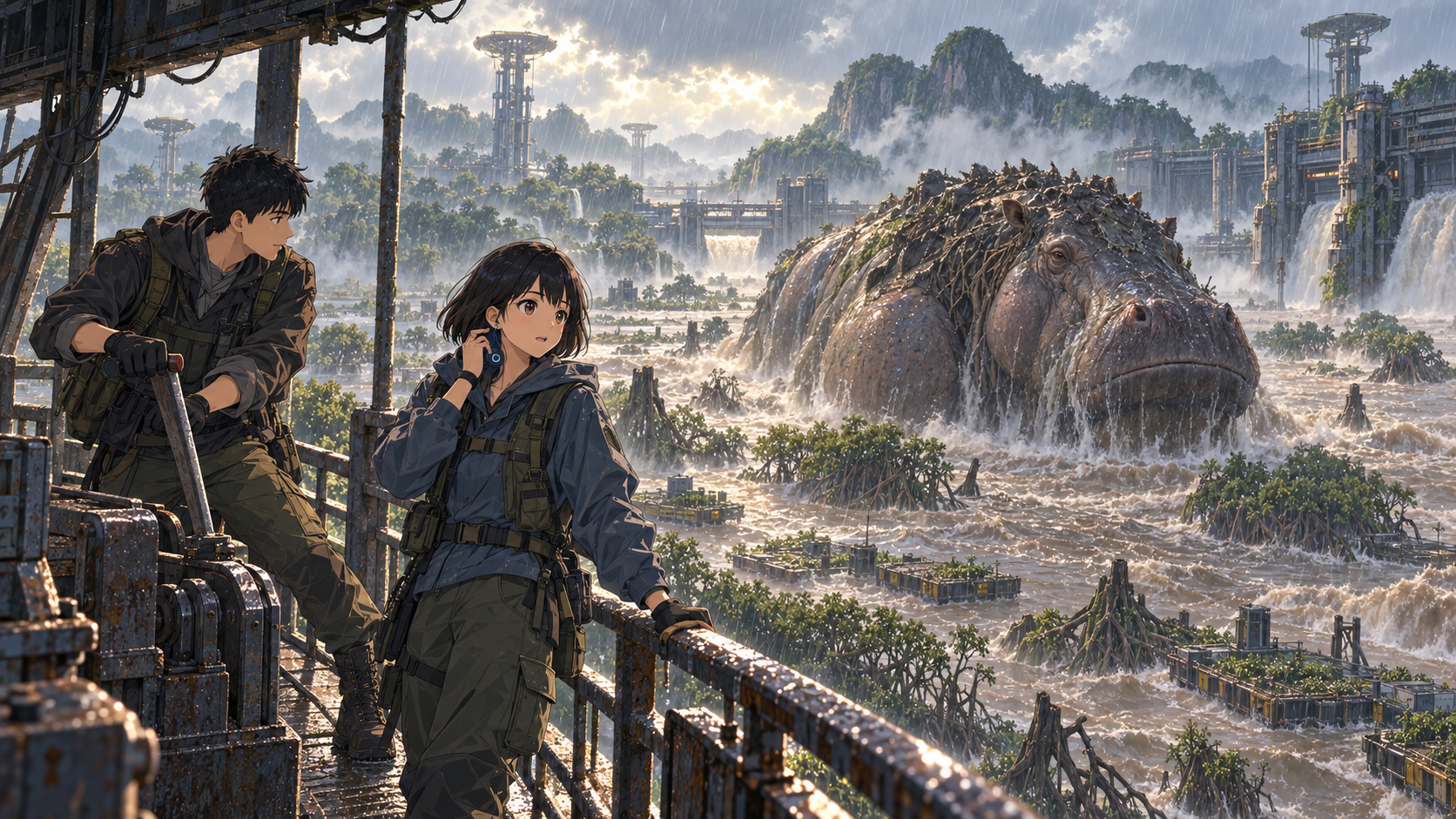
The animal rises beneath the Sinking Root Gate rather than charging it. Its immense back pushes the floating root island downward, and one breath draws the seed rafts into an arc. Every seventy-two seconds, the blocked spillway returns another pressure wave. When the fixed pump rhythm stops and the natural ebb enters the channel, the hippopotamus turns into the deep route and leaves under its own power.
Observation LevelCoastal field note
First SeenDay 05 · Day 05 · Sinking Root Gate
HabitatDeep ebb channels beyond the monsoon gate, emergency spillways, mangrove root islands, and floating seed rafts in the Rain-Vein Floating-Root Seedbank
VariantsUnconfirmed juveniles with crown plates not yet closed, 18-meter adults, and a single calamity individual occupying the deep channel
Habitat and Mechanism
Deep ebb channels beyond the monsoon gate, emergency spillways, mangrove root islands, and floating seed rafts in the Rain-Vein Floating-Root Seedbank。The heavy crown plates and flank pressure sacs read monsoon tidal differences across deep channels. Under a natural ebb, this individual remains outside the floating seedbank. The city's fixed pump rhythm forced polluted muddy water backward and drove the animal toward the root gate, turning the entire channel into a pressure chamber. Each breath bent the seed rafts into an arc, while the resulting pressure waves could tear those rafts apart and sink mangrove root islands. Opening the Calamity Spillway and Returning-Tide High Gate restored an ebb route wide enough for the animal to leave without confrontation.
Enter Rain-Vein Floating-Root Seedbank ↗Behavior and Ecological Role
The animal rises beneath the Sinking Root Gate rather than charging it. Its immense back pushes the floating root island downward, and one breath draws the seed rafts into an arc. Every seventy-two seconds, the blocked spillway returns another pressure wave. When the fixed pump rhythm stops and the natural ebb enters the channel, the hippopotamus turns into the deep route and leaves under its own power.
Under normal tides, this deep-channel megafauna stays beyond the seedbank and converts monsoon pressure into broad surges along the ebb corridor. Infrastructure failure displaced that force into a nursery and seed-storage network. Its movement reveals the true scale and direction of the hydraulic error; its departure marks the release of calamity pressure from the floating roots.
Form and Identification
Unconfirmed juveniles with crown plates not yet closed, 18-meter adults, and a single calamity individual occupying the deep channel
- Calamity-class amphibious body approximately 18 meters long with plausible hippopotamus proportions
- Storm-gray matte hide and black tidal-mud crown plates across the skull and shoulders
- Pressure-swollen flank sacs that register changes in the monsoon tide
- Root-scarred pillar legs capable of bearing the animal in deep muddy channels
- Channel-wide brown surge waves produced by displacement rather than an attack
Observation Rule
Fang and K do not treat the animal as a target. They do not attack, aim, pursue, touch, capture, or try to steer it. Fang observes crown movement, flank pressure, and water displacement from protected high ground. K changes only human infrastructure, keeps active weapons stowed, and opens an unforced retreat route. The hippopotamus chooses the deep channel and leaves on its own.
Outside Sinking Root Gate, the water rose from below as the 18-meter back surfaced and pressed the entire floating root island downward. The animal did not attack. Fang read the crown and flank pressure pattern from the elevated maintenance deck. K kept a retreat route clear and prepared the human-operated spillway, with every active weapon stowed.