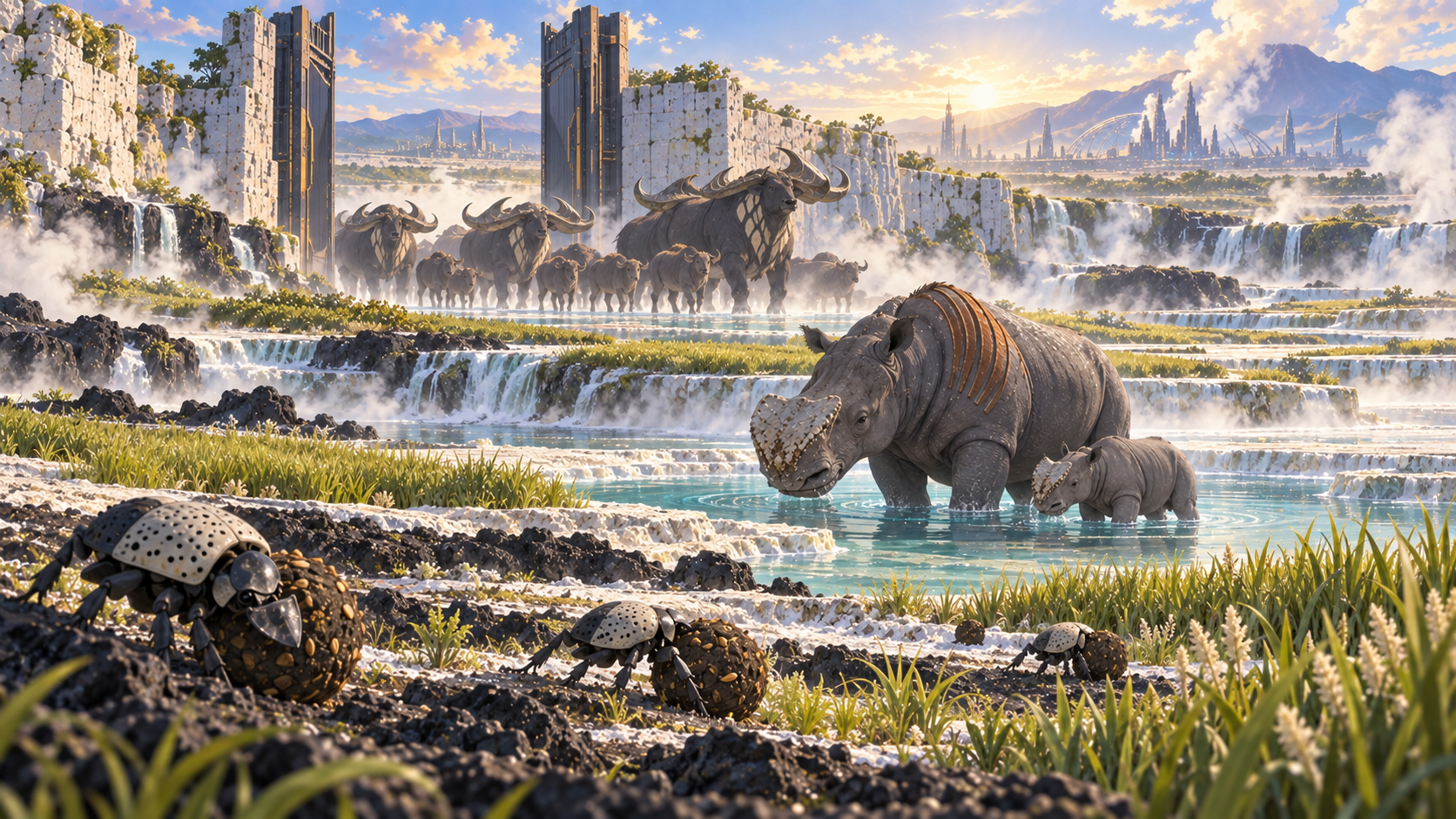
Earthsong Cold-Spring Migration Gate
This passage lies between the high-walled city and the rift's geothermal marsh. A Subsurface Cold-Water Lens once held back superheated brine and fed a chain of cold springs through black-lava fractures. Tube worms, beetles, rhinoceroses, wild dogs, and giant bovids read temperature, soil, and microtremors at different scales. The Ninth Condensation Gate opens only when the natural tremor field and cold-water level are both safe. The wall is therefore not a permanent barrier, but a temporary boundary that must obey the habitat's rhythm.
- Parent Domain
- NB-08 · Swahili Rift Seawall
- Location
- Outside the Ninth Condensation Gate on the southern side of the Swahili Rift Seawall, spanning coral-stone walls, geothermal salt marsh, black-lava terraces, mangrove margins, and an ancient megaherbivore migration line.
The city expanded desalination and geothermal power by pumping continuously from the Subsurface Cold-Water Lens. Superheated brine backflowed through new fractures. Tube worms retracted, hot cavities formed under the salt crust, beetles abandoned their seeding route, and rhinoceros cooling pools dried out. A fixed diagnostic pulse from an old geothermal beacon then drowned out the wild dogs' safe relay rhythm. The giant bovid herd was finally trapped outside a closed gate by dry pools and a false earthsong. Fang and K had to stop one-way extraction, restore gravity-fed recharge, silence the false pulse, and open the migration gate in stages.
How Earthsong Cold-Spring Migration Gate Works
Sulfur-Crown Tube Worm Colonies begin retracting their gill crowns seventeen seconds before the city alarm, and the order of retraction marks the direction of geothermal pressure and brine flow. Salt-Porcelain Seed Beetles carry salt-tolerant seed in dung balls across the crust. Cold-Pool Shield-Nosed Rhinoceroses reopen cooling pools that serve many large animals. Rift-Listening Wild Dog Packs relay safe thermal windows across lava ridges by stamping. The Lava-Vein Double-Crown Giant Bovid Herd follows cold pools, grass belts, and true microtremors through the gate; its dung then supplies the beetles with seed-rich material that reconnects the grass belt. Each species reveals a different layer of one migration system.
Observation Ethic
Fang and K remain outside colonies, nursery positions, and herd formations. They use passive seismometers and remote thermal readings, keep active weapons stowed, and preserve retreat space for people and animals. They do not touch the tube worms, place beetles on a route, force the rhinoceros into water, make the wild dogs follow, or drive the bovid herd through the wall. They correct valves, pumps, and false signals, then allow the habitat to confirm when passage is safe.
Five-Day Route
- At No. 9 Steam-Spring Basin, use the tube worms' synchronized retraction to prove that the cold-water lens is thinning and hot brine is rising.
- At Salt-Crust Dung-Trace Slope, follow the beetles' detour to find a hot underground cavity and the break in the grass belt.
- At Shield-Nose Cold Pool, read the old wallows and remove the one-way settlement lock so cold water can return by gravity.
- At Tremor-Listening Wild Dog Ridge, shut down Offbeat Geothermal Beacon and let the pack rebuild its relay of safe thermal windows.
- At Double-Crown Migration Gate, separate true microtremors from the false pulse, open Ninth Condensation Sluice in stages, and stand clear as the herd crosses in maternal order.
Five species maintaining this local ecology
 Day 01
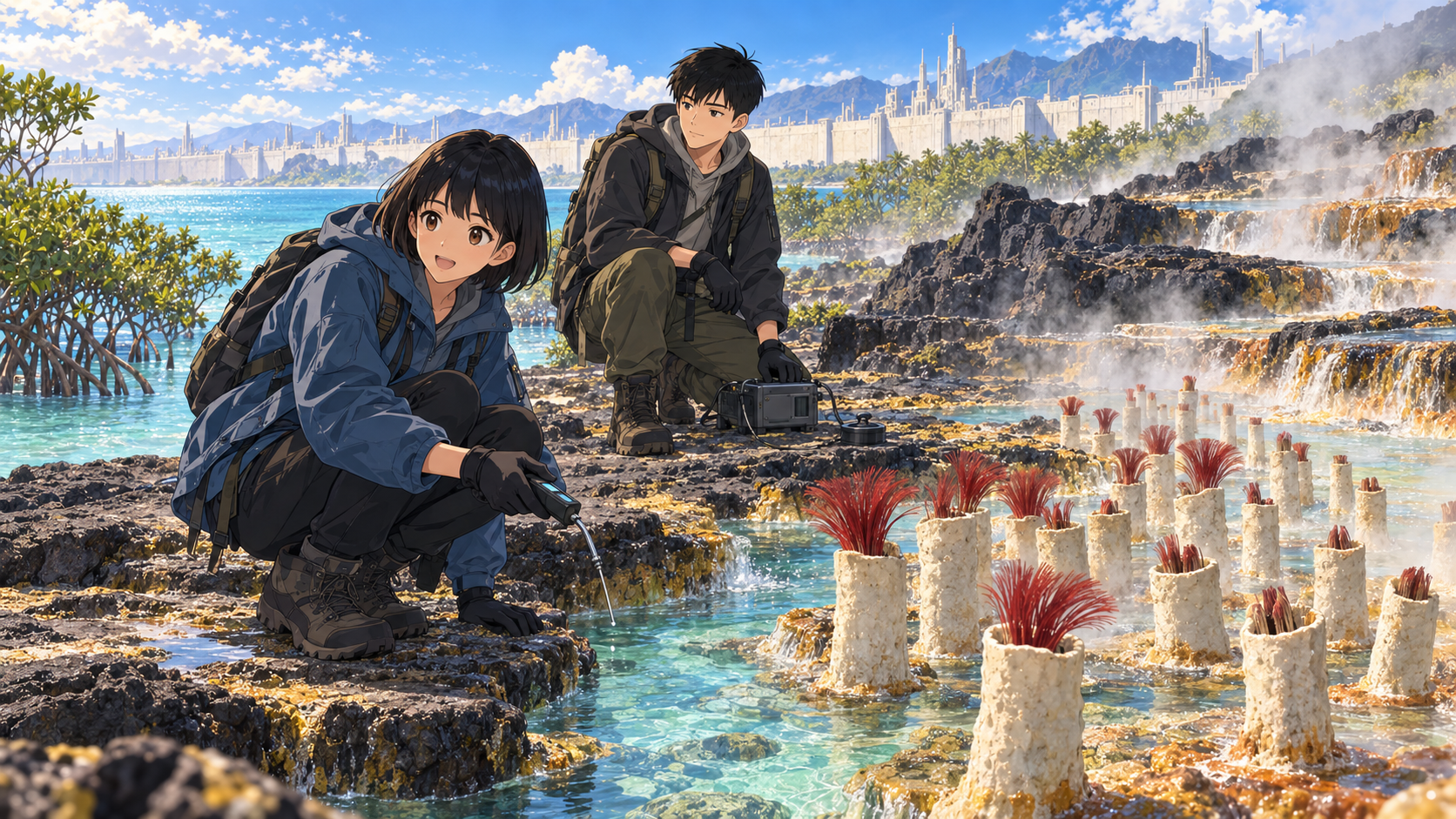
Sulfur-Crown Tube Worm Colony
These annelids rely on symbiotic bacteria to absorb geothermal sulfides. Their porcelain-white mineral tubes remain fixed to the spring bank while the crimson branchial crowns retract before pressure rises. Retraction advances from the hottest end of the colony and gives the invisible brine movement a direction. After cool recharge water suppresses the hot brine, the crowns reopen from the outer edge in clustered succession.
 Day 02
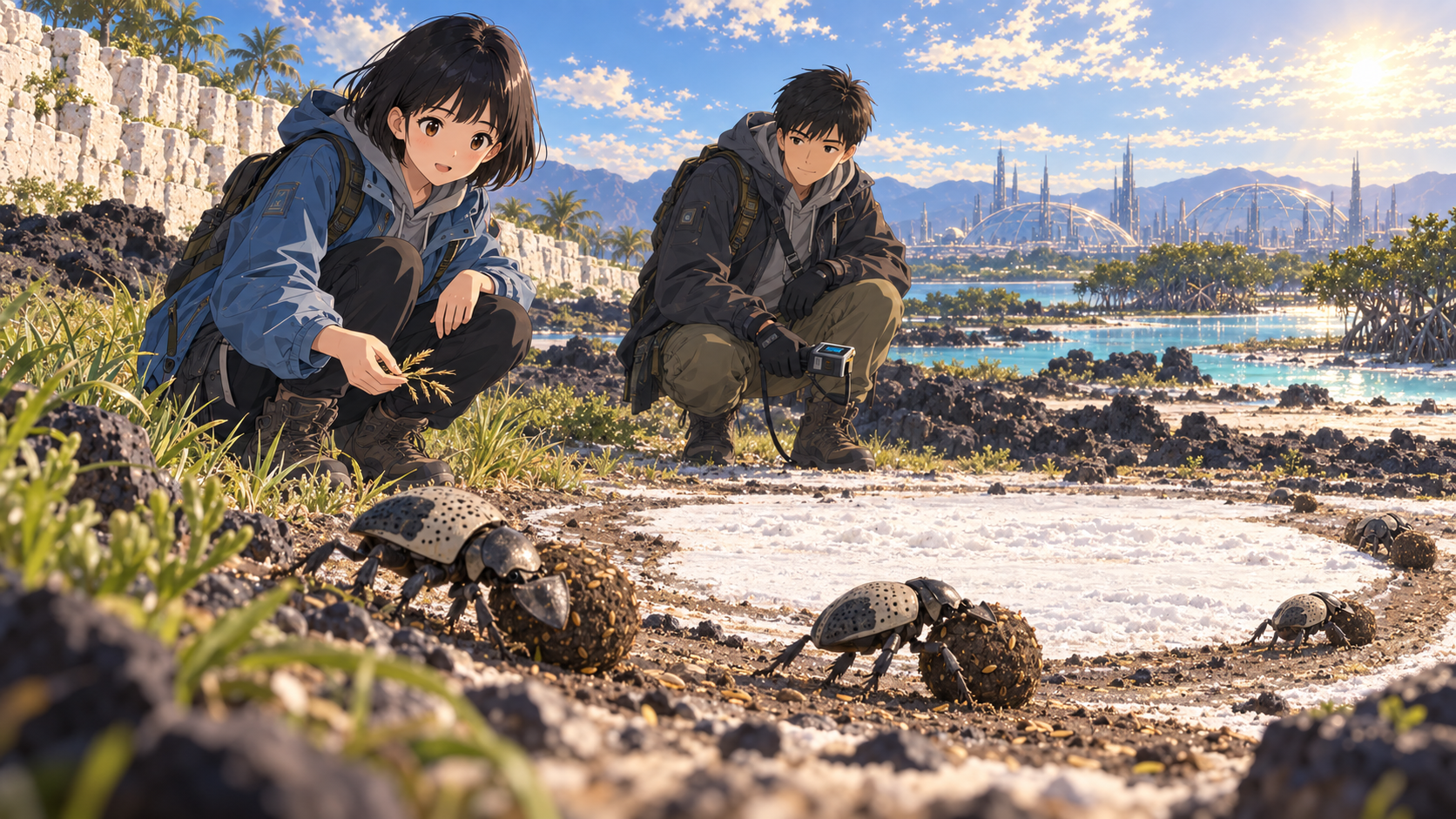
Salt-Porcelain Seed Beetle
Adults use broad shovel heads and powerful digging legs to shape megafaunal dung and salt-tolerant seed into compact balls. Small groups push the balls along repeated tracks and avoid ground that has become hollow and overheated below. When cool recharge water reaches a grass seam, the first beetle tests the damp edge several times before crossing; the rest follow the same line without human direction.
 Day 03
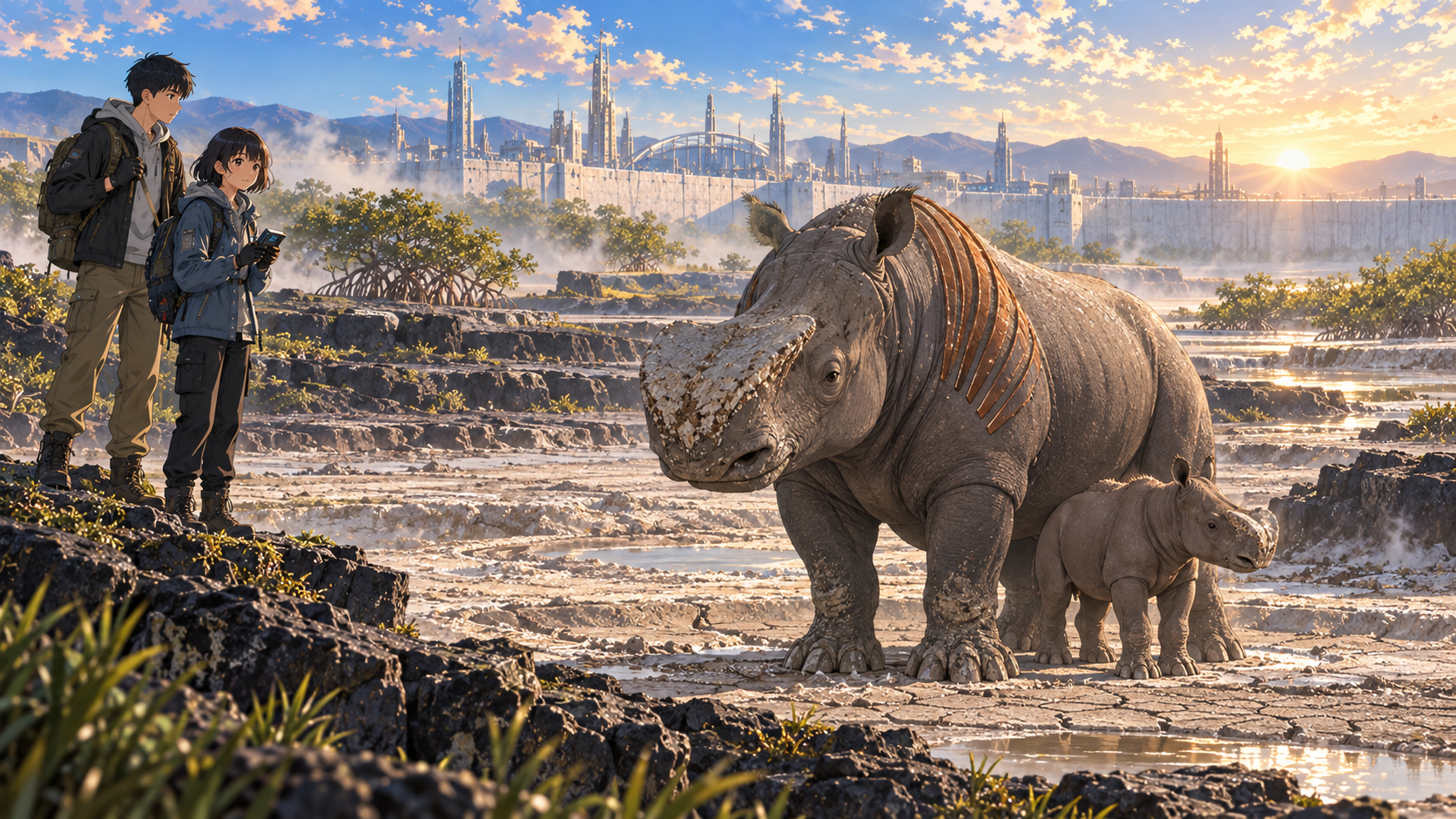
Cold-Pool Shield-Nosed Rhinoceros
Adults use their broad nasal shields to pry up brittle salt crust and repeatedly deepen spring pools. Low copper lamellae along the shoulders conduct body heat into cool mud, while broad feet spread their weight across soft ground. A protective female holds position between a dry pool and her calf, but does not advance. She waits for water to return, then follows her own old tracks and enlarges the new shallow pool for the calf.
 Day 04
Rift-Listening Wild Dog Pack
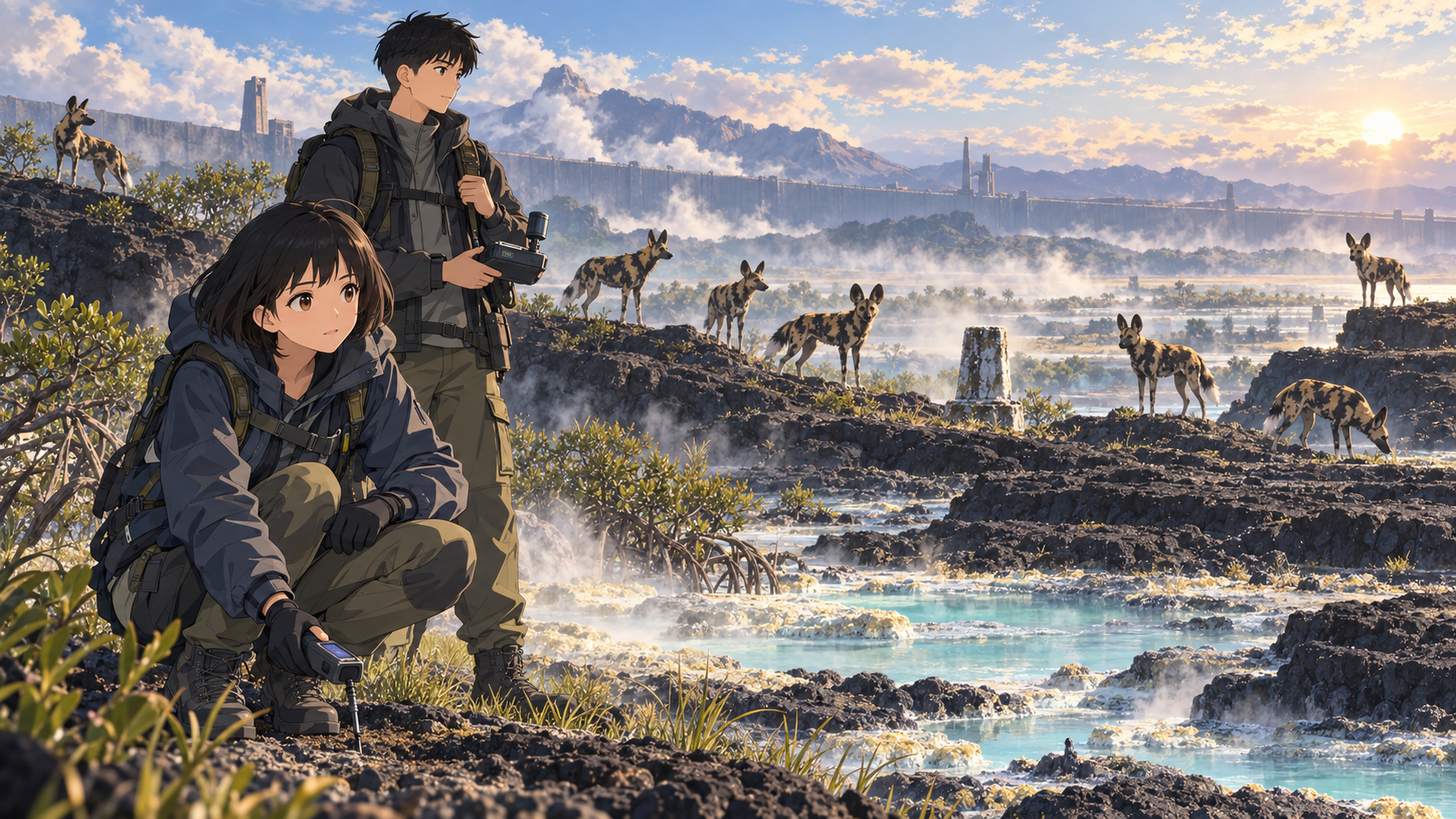
Members occupy separate lava platforms and tap short patterns with their forepaws. The pack divides those patterns into warning, passage, and withdrawal signals rather than relying on calls. The lead animal waits for stable replies from both flanks before crossing. Adults test a narrow ridge first, one member holds a high station, and a member traveling with a juvenile crosses last. When the distant bovid herd calls, the entire pack turns toward it and withdraws in sequence to a side ridge.
 Day 05
Lava-Vein Double-Crown Giant Bovid Herd
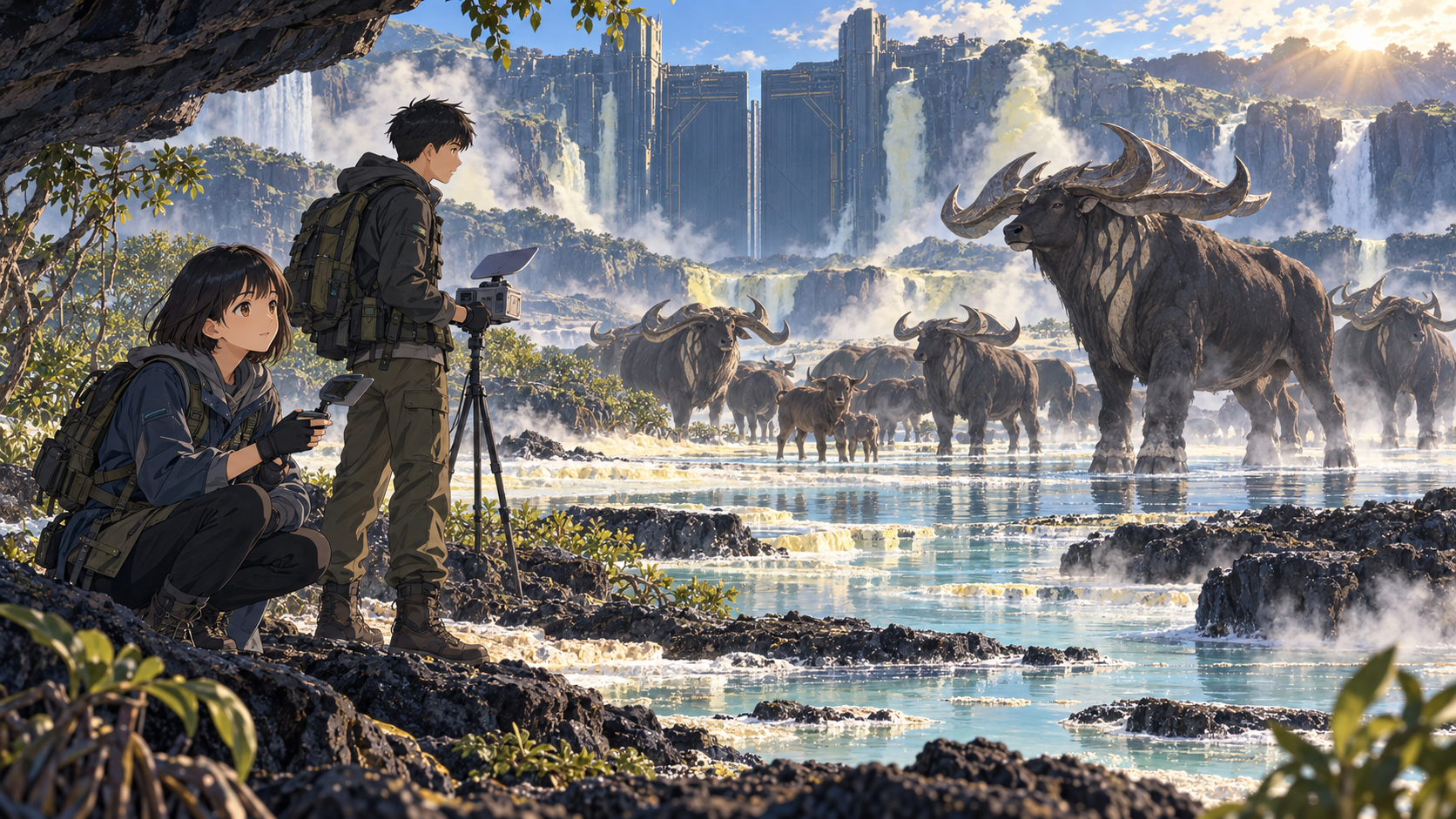
The herd reads subsurface heat veins through resonance in its double-layered horn crowns. Pale windows along the neck release body heat, and immense split hooves cross hot mud while spreading each step's pressure through the marsh. When a false tremor threatens calves, the bull stands broadside across the remaining gap instead of charging. During passage, calves stay inside the formation, adult cows use their crowns to separate them from sulfur-spring edges, and the bull leaves the dike last.
「The wall, the dry pools, and the false pulse were parts of the same human-made obstruction. When Fang and K restored recharge and silence, the tube worms reopened their crowns, the rhinoceros deepened a new cold pool, and the wild dogs rebuilt their relay. The giant bovid herd then passed through the gate in its own maternal order, leaving dung that the beetles rolled together with salt-tolerant seed to reconnect the grass belt. Extreme danger did not justify elimination. It demanded that the city stop treating an ancient migration line as empty space.」