Seventeen Seconds Before the Alarm
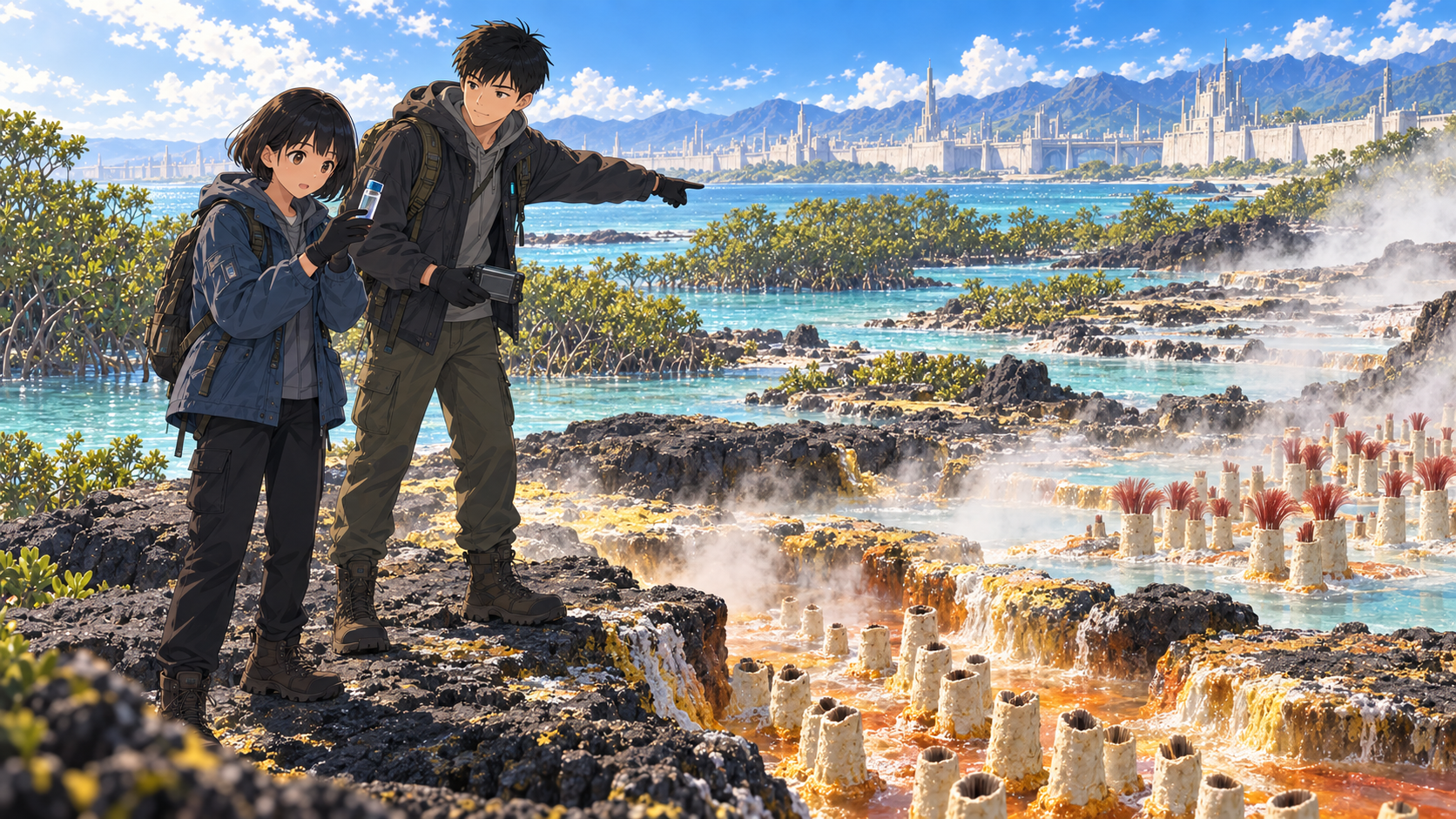
Mist at No. 9 Steam-Spring Basin moved flat across the salt. Fang and I had not yet heard the pumping well start when the crimson crowns above the ivory mineral tubes began retracting in sequence from the city side. Fang left her temperature probe at the colony's edge. I shut down active scanning and let a passive seismometer record the low sound below us. Each rise in well pressure sent the retreat line across the bank seventeen seconds before the alarm.
Field Observation
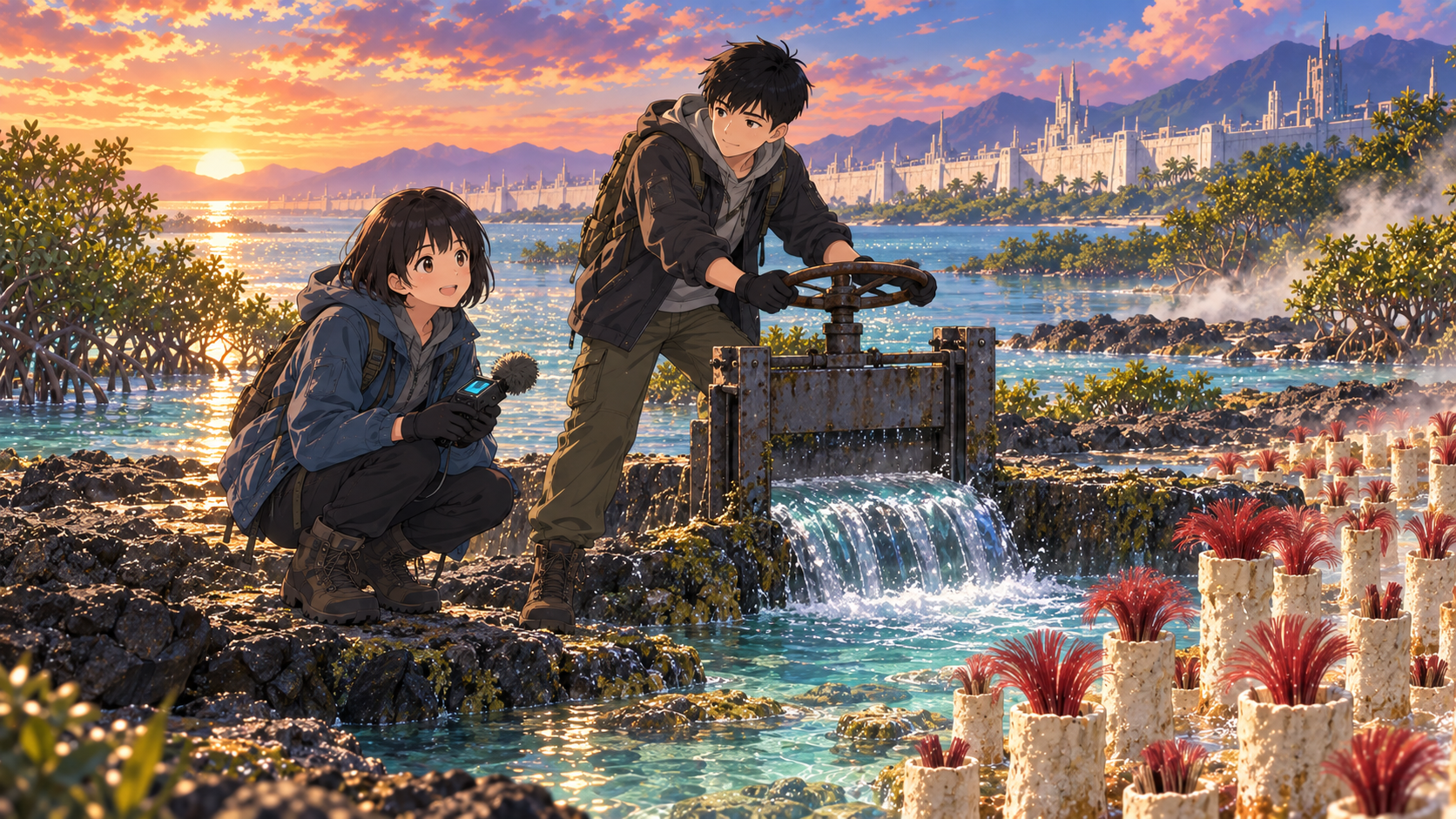
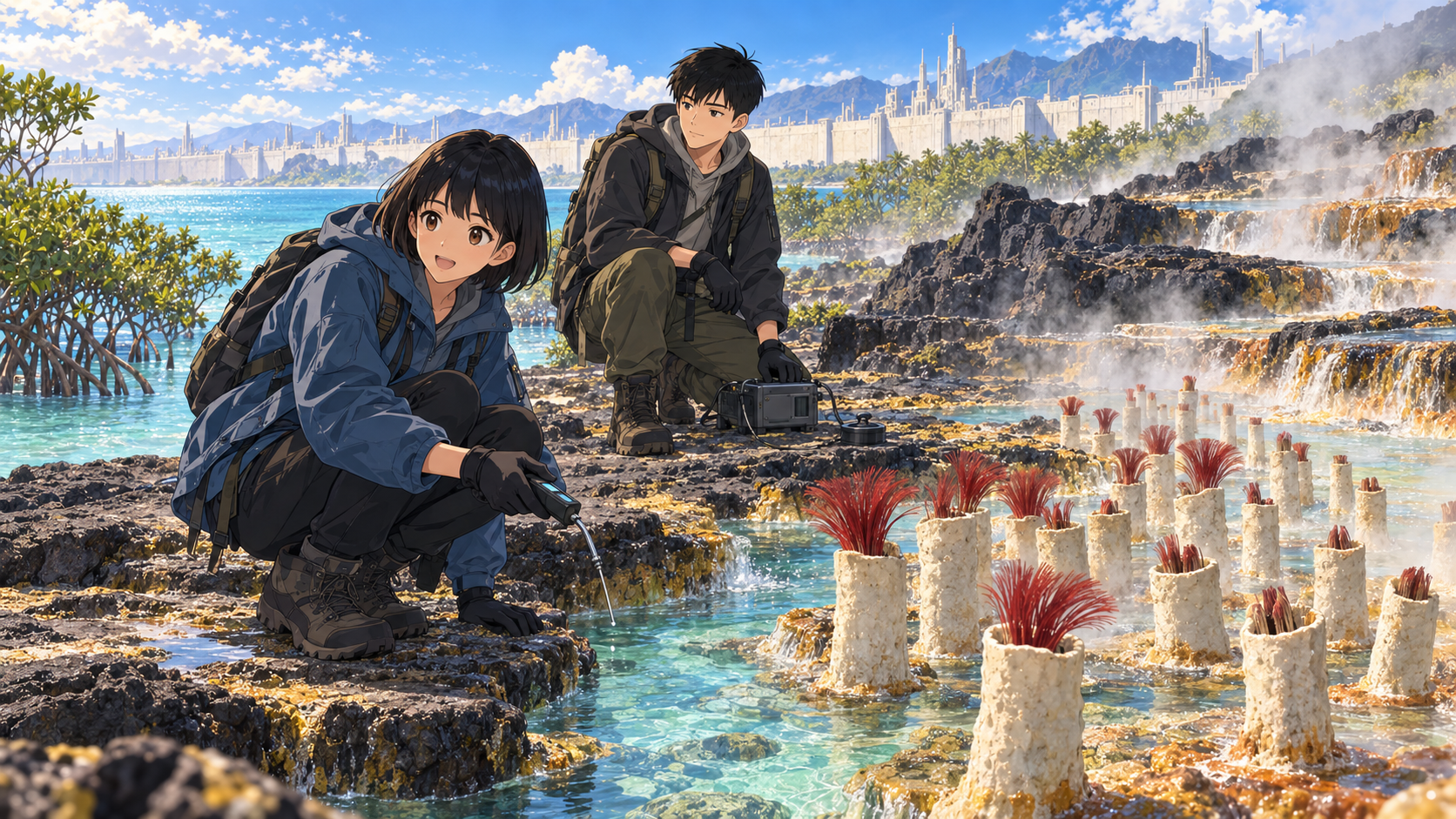
We descended from Ninth Condensation Gate to No. 9 Steam-Spring Basin, the spring bank nearest the city's pumping wells, and remained outside the mineral-tube colony. At noon, we followed the order of crown retraction toward the black-lava end of Sulfur-Crown Retreat Line and compared three water layers. In the evening, we withdrew to Cold-Lens Recharge Intake, where we could operate the old human-built gate without entering the colony and let cool water reach the fractures by gravity.
Morning · No. 9 Steam-Spring Basin
They were not retreating from us. They were making invisible superheated brine legible across the geothermal salt marsh. Fang told me not to mistake synchronized response for panic. I marked the first fracture on the map and stopped the scheduled pumping command before transmission. The crowns stayed withdrawn. We remained outside the colony, with active equipment off, and let the timing become evidence.
Noon · Sulfur-Crown Retreat Line
By noon, the line had shifted beneath the black-lava terrace. Fang sampled three water layers while I overlaid the order of crown retraction on the old geothermal-well record. The Subsurface Cold-Water Lens had once separated brine from the root zone. Desalination wells had drawn it into a thin sheet, allowing hot brine to rise through new fractures and replace it. The mineral tubes had not moved, but the crowns closed step by step from the hottest end, giving the pressure change a direction. Fang said the city believed it had removed only groundwater. It had also removed the habitat's insulation. I moved our safe route upwind and touched nothing. We already had enough evidence.
Evening · Cold-Lens Recharge Intake
In the evening, we opened only one section of the old gravity-fed recharge gate. The spring mist was still dense when the first cool water entered the fracture. After the second low sound underground, the outer tube worms extended their crowns first. Crimson branching outlines returned to the water in clusters. Fang did not adjust their positions. She marked the line where cool water could once again hold down the hot brine. I locked the recharge flow within the natural seepage range and kept my weapon stowed. The reopening was not a performance. It marked the temperature boundary that would let every large animal behind them continue across the salt marsh.
Habitat Causality
The Subsurface Cold-Water Lens normally suppresses superheated brine and keeps the geothermal salt marsh within a passable temperature range. Continuous extraction for desalination thinned the lens, allowing hot brine to rise through new fractures. The colony's sequential crown retraction traced that intrusion seventeen seconds before the city alarm. Restoring one gravity-fed recharge section within the natural seepage range re-established the boundary without moving the animals.
Species Behavior
Sulfur-Crown Tube Worms occupy fixed ivory mineral tubes and use symbiotic bacteria to absorb geothermal sulfides. Their restrained crimson branchial crowns retract before pressure rises, beginning at the hottest end of the colony. After cool water suppressed the brine, the outer colonies reopened first and the rest followed in clusters on their own timing.
「Fang marked the recovered cold-water line instead of the animals. I left the recharge flow inside the natural seepage range. We had not repaired the colony. We had stopped the city from stripping away the boundary it had been reading all along.」