The Ground the Beetles Refused
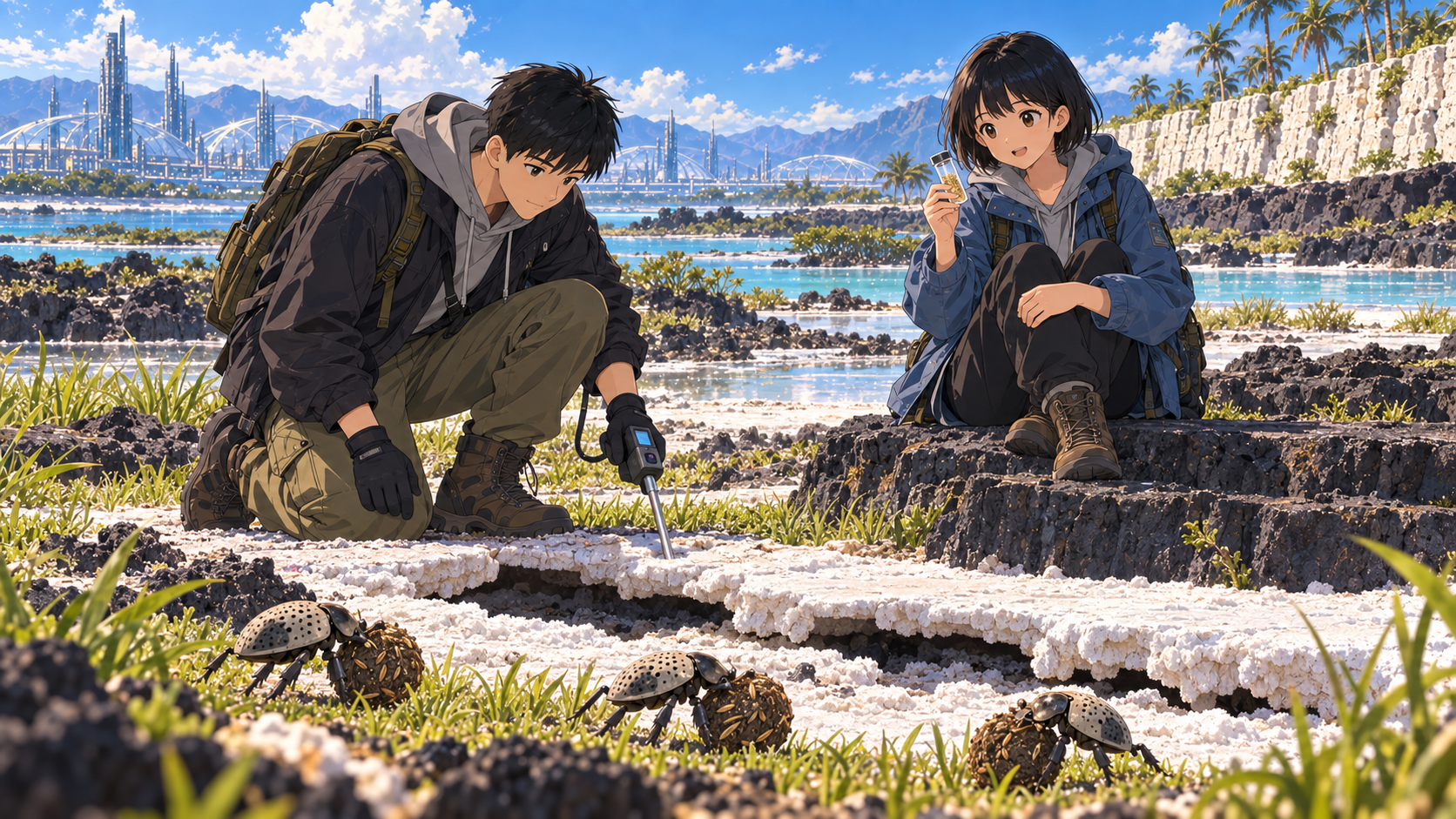
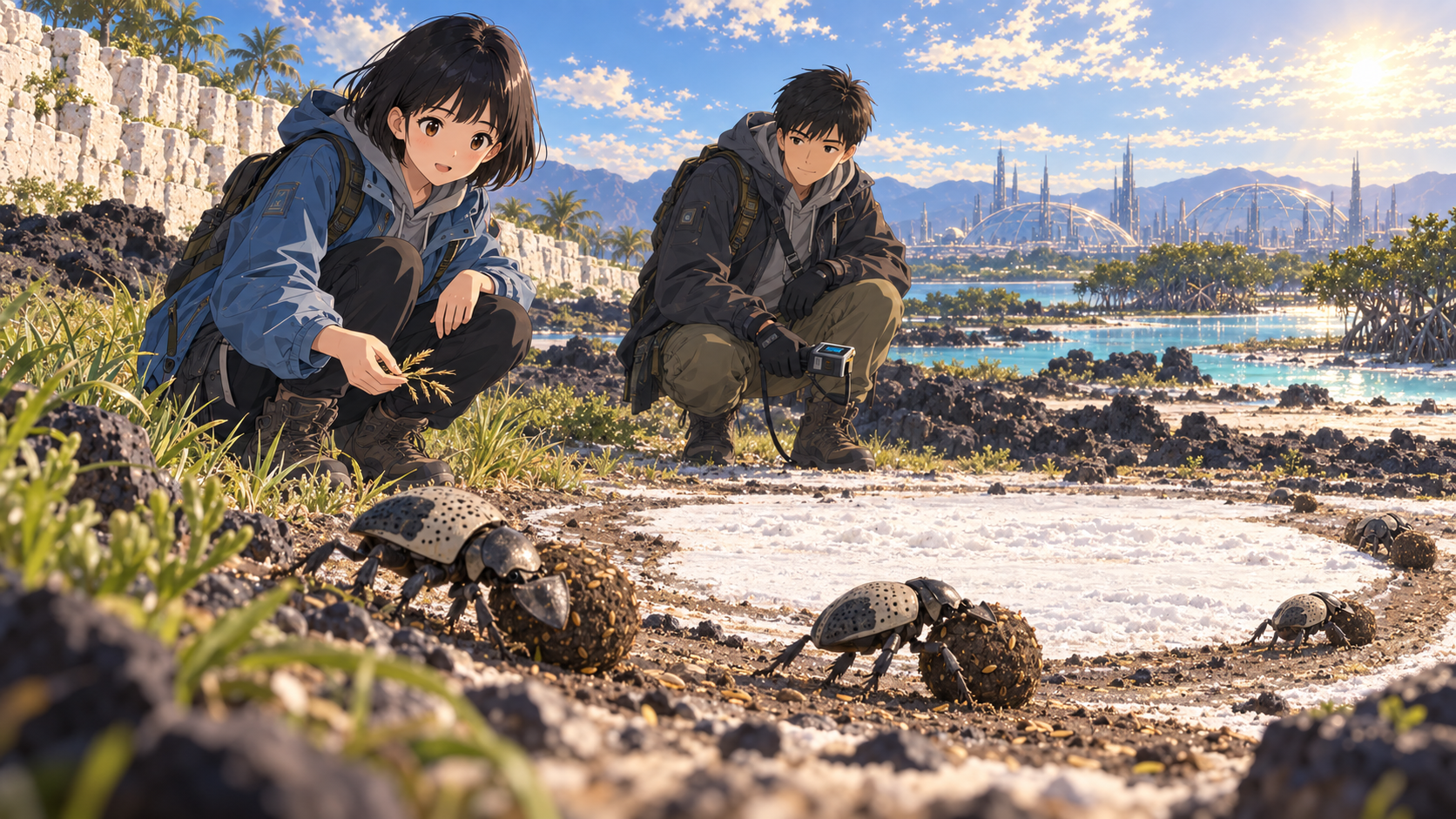
Salt-Crust Dung-Trace Slope should have offered the shortest route. Instead, the Salt-Porcelain Seed Beetles pushed their seed-rich dung balls into a broad curve, choosing rough lava over the white ground in the center. Fang stayed outside the trail and examined salt-tolerant seed left behind. I scanned the insect-free ground with thermal imaging. The surface was only a few degrees warmer than its surroundings, but heat had collected below it like an empty pot.
Field Observation
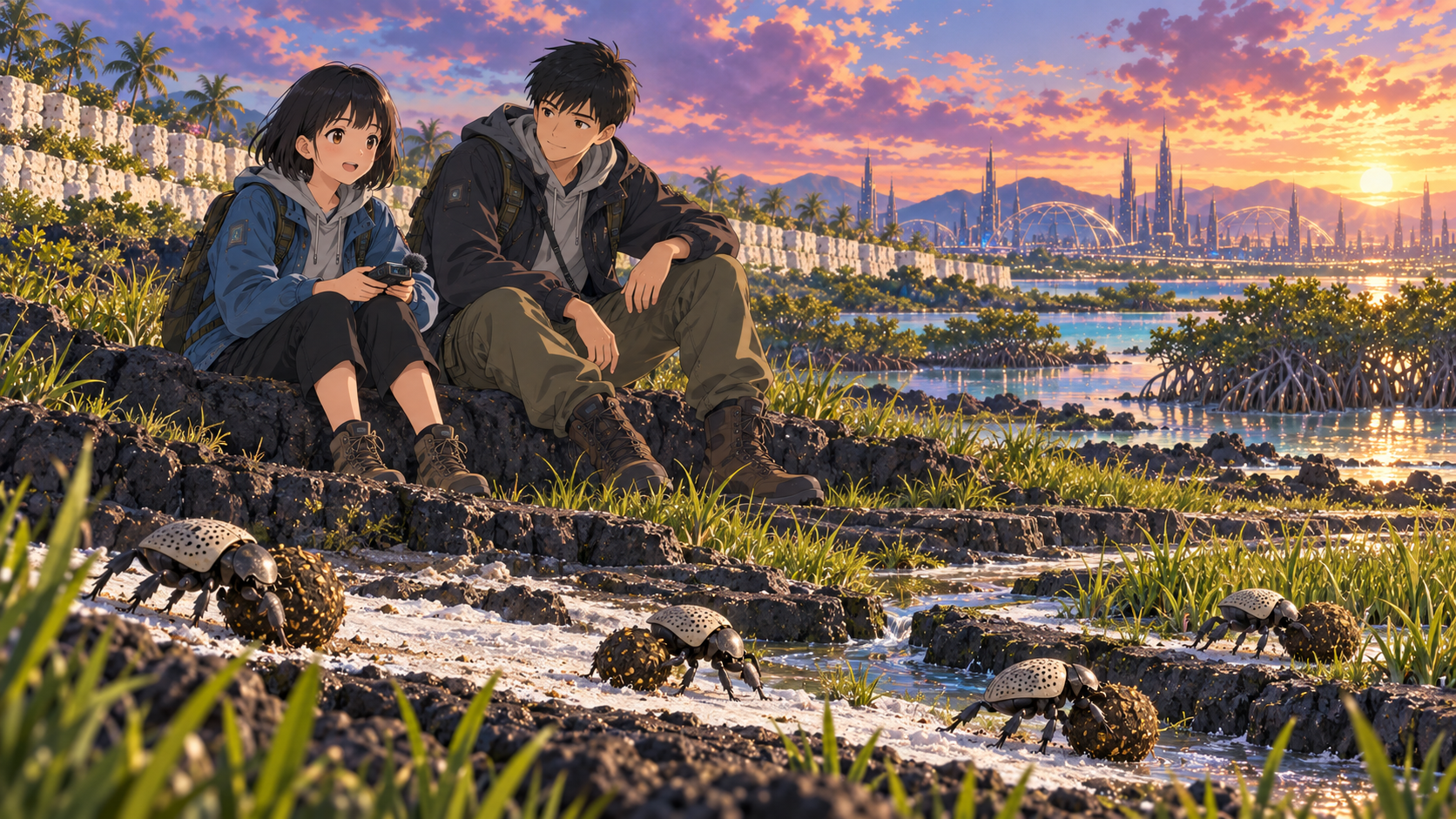
We climbed from Cold-Lens Recharge Intake along an old megafaunal dung trail to Salt-Crust Dung-Trace Slope, where we watched the beetles avoid the central crust. At noon, we followed parallel rolling traces to the thinnest salt layer along Seed-Beetle Rolling Trail and compared the cavity below with noninvasive thermal readings. In the evening, a new gravity-fed recharge branch led us to Black-Lava Grass Seam, where we waited for the beetles to reconnect their seed route with the megafaunal corridor on their own.
Morning · Salt-Crust Dung-Trace Slope
Their porcelain-white elytra could shed heat, yet they still would not cross the center. The problem was not sunlight. Fang told me to find the last point where the rolling traces had run straight. I kept my weapon stowed and followed the edge instead of redirecting the insects. Those small balls had placed megafaunal nutrients, grass seed, and an underground fracture that had lost its cold water on the same map.
Noon · Seed-Beetle Rolling Trail
At noon, the trail divided into three. Fang opened one naturally split old ball. It held seeds from cold-spring grass, black-terrace sedge, and high-dike silvergrass. I inserted a fine probe only at the edge of the salt crust and left every nest opening intact. With the cold water gone, the central layer had become a thin, brittle cavity. Each time a distant extraction well increased pressure, hot air pulsed upward through hairline cracks. The beetles were not short of food. They were choosing ground where the seeds could still germinate. If the city kept pumping, the grass belt before the migration gate would break first, leaving the giant horned bovids only a route close to the high wall. When Fang packed away the sample, I marked the second well for shutdown.
Evening · Black-Lava Grass Seam
The evening recharge water did not flood the salt crust. It spread slowly along Black-Lava Grass Seam. The first beetle stopped at the damp line and tested the ground several times with its broad shovel head before pushing its dung ball across. The others followed the same line without our guidance. Fang recorded the new route from a distance. I moved one loose city cable marker back onto its artificial base so they would not have to detour around it. Seed reached the bare ground before the migration gate again. The cool water was doing more than lowering the temperature. It was restoring soil that grass roots—and the life behind them—could trust.
Habitat Causality
Continuous extraction had thinned the Subsurface Cold-Water Lens, leaving a brittle cavity that trapped geothermal heat beneath the central salt crust. The beetles' abrupt curved route exposed the thermal break before the surface failed. Gravity-fed recharge returned damp soil to Black-Lava Grass Seam, allowing seed transport and the migration grass belt to reconnect without moving or directing the insects.
Species Behavior
Salt-Porcelain Seed Beetles use broad shovel heads and strong digging legs to combine megafaunal dung with salt-tolerant grass seed. Small groups roll the balls along repeated tracks, but avoid hollow, overheated ground even though their porous elytra release heat. After recharge water reaches a grass seam, the lead beetle tests the damp edge several times and the group chooses whether to follow.
「I marked the second extraction well for shutdown and left the rolling trail untouched. We did not choose a safer route for the beetles. We restored the cold-water boundary, and they showed us where living ground still began.」